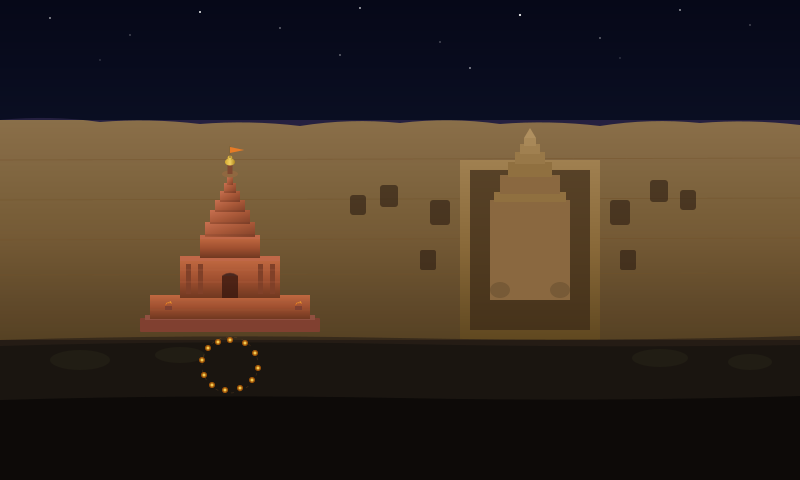
Twelve manifestations of Lord Shiva as infinite light — the most sacred Shaiva pilgrimage circuit spanning all of Bharata
A Jyotirlinga (Sanskrit: = light, = mark or form) is a manifestation of Shiva as an infinite column of light — a pillar without beginning or end that pierced through earth and sky. The Shiva Purana records twelve sites across India where this light took form and became accessible to devotees as the Jyotirlinga.
Each Jyotirlinga is distinct in its mythological origin, its form of Shiva, and the quality of liberation it is said to offer. Together, they form a sacred geography of Shaiva tradition — from the Himalayas to the southern tip of the subcontinent — connecting the pilgrimage circuit that Adi Shankaracharya systematised in the 8th century CE.
Looking for the Jyotirlinga linked to your zodiac sign? See Jyotirlinga according to Rashi — the traditional rashi-wise association of all twelve.
Also explore
Looking for Devi circuits too? Browse 51 Shakti Peethas for map filters, country clusters, and practical yatra routes.
| # | Temple | State | Open |
|---|---|---|---|
| 01 | Somnath | Gujarat | Year-round |
| 02 | Mallikarjuna | Andhra Pradesh | Year-round |
| 03 | Mahakaleshwar | Madhya Pradesh | Year-round |
| 04 | Omkareshwar | Madhya Pradesh | Year-round |
| 05 | Kedarnath | Uttarakhand | May – Nov |
| 06 | Bhimashankar | Maharashtra | Year-round |
| 07 | Kashi Vishwanath | Uttar Pradesh | Year-round |
| 08 | Trimbakeshwar | Maharashtra | Year-round |
| 09 | Vaidyanath | Jharkhand | Year-round |
| 10 | Nageshwar | Gujarat | Year-round |
| 11 | Rameshwaram | Tamil Nadu | Year-round |
| 12 | Grishneshwar | Maharashtra | Year-round |
General darshan hours for each Jyotirlinga temple. Timings may vary on festival days, during Shravan month, and on Mahashivratri. Always verify locally before your visit.
| Temple | Morning Darshan | Evening Darshan | Special Ritual |
|---|---|---|---|
| Somnath | 6:00 AM – 12:00 PM | 5:00 – 9:00 PM | Sound & Light Show (nightly) |
| Mallikarjuna | 5:30 AM – 1:00 PM | 4:00 – 9:00 PM | Mahashivratri Brahmotsavam |
| Mahakaleshwar | 7:00 AM – 1:00 PM | 3:00 – 9:00 PM | Bhasma Aarti (4:00 AM, advance booking) |
| Omkareshwar | 5:00 AM – 12:00 PM | 4:00 – 9:30 PM | Parikrama of Mandhata island |
| Kedarnath | 5:00 AM – 12:00 PM | 2:00 – 9:00 PM | Open May–Nov only; touch-darshan |
| Bhimashankar | 5:00 AM – 12:00 PM | 4:00 – 9:30 PM | Shravan Somvar Abhishek |
| Kashi Vishwanath | 3:00 AM – 11:00 AM | 5:00 – 9:30 PM | Mangala Aarti (3:00 AM); Shayan Aarti (9 PM) |
| Trimbakeshwar | 5:30 AM – 1:00 PM | 3:00 – 9:00 PM | Rudrabhishek; Kumbh Mela site |
| Vaidyanath | 5:00 AM – 12:00 PM | 2:00 – 9:00 PM | Shravan Mela (Jul–Aug) |
| Nageshwar | 5:00 AM – 12:00 PM | 3:00 – 9:00 PM | Combine with Dwarka darshan |
| Rameshwaram | 5:00 AM – 1:00 PM | 3:00 – 9:00 PM | 22 theertham bath before darshan |
| Grishneshwar | 5:30 AM – 12:30 PM | 3:00 – 9:30 PM | Combine with Ellora Caves visit |
Last updated: May 2026. Temple administrations may revise hours seasonally. Kedarnath is closed November–April. Bhasma Aarti at Mahakaleshwar requires advance booking via the official temple portal.
Pilgrimage Strategy
Most pilgrims visit the 12 Jyotirlingas in regional groups over multiple trips rather than a single continuous journey.
Maharashtra
4 Jyotirlingas
Bhimashankar, Trimbakeshwar, Grishneshwar, (+ Omkareshwar nearby)
Gujarat
2 Jyotirlingas
Somnath, Nageshwar
North India
3 Jyotirlingas
Kashi Vishwanath, Vaidyanath, Kedarnath
South India
2 Jyotirlingas
Mallikarjuna, Rameshwaram
Use our AI Trip Planner on any temple page to plan your cluster visit
The most practical approach to visiting all 12 Jyotirlingas is to plan them as 3–4 separate trips organised by geographic cluster. The Maharashtra cluster (Bhimashankar, Trimbakeshwar, Grishneshwar, and nearby Omkareshwar) can be completed in 5–7 days from Mumbai or Pune. The Gujarat pair (Somnath and Nageshwar) takes 3–4 days from Ahmedabad.
Kedarnath requires careful seasonal planning as it is open only from May to November, and involves a 16 km trek from Gaurikund (or a helicopter ride). Kashi Vishwanath and Vaidyanath can be combined in a single 4–5 day trip from Delhi or Patna. Mallikarjuna (Srisailam) and Rameshwaram are best visited together on a South India circuit.
For auspicious timing, Maha Shivaratri and every Monday are considered the most sacred days for Jyotirlinga darshan. The Shravan month (July–August) is another highly auspicious period, though expect significantly larger crowds at all 12 temples.
About These GuidesThese pages are informational resources about the history, mythology, and spiritual significance of Jyotirlinga temples. Daanyam is a ritual facilitation platform — we connect devotees with verified kartas for daily sevas. We do not represent any temple trust or claim affiliation with any Jyotirlinga administration.
What are the 12 Jyotirlinga temples in India?
The 12 Jyotirlinga temples are: Somnath (Gujarat), Mallikarjuna (Andhra Pradesh), Mahakaleshwar (Madhya Pradesh), Omkareshwar (Madhya Pradesh), Kedarnath (Uttarakhand), Bhimashankar (Maharashtra), Kashi Vishwanath (Uttar Pradesh), Trimbakeshwar (Maharashtra), Vaidyanath (Jharkhand), Nageshwar (Gujarat), Ramanathaswamy/Rameshwaram (Tamil Nadu), and Grishneshwar (Maharashtra).
What is a Jyotirlinga?
A Jyotirlinga (Sanskrit: jyoti = light, linga = form) is a manifestation of Lord Shiva as a column of infinite light. The Shiva Purana records twelve sites across India where Shiva took this form. Each Jyotirlinga is considered a svayambhu — self-manifested — and worshipping all twelve is believed to bestow liberation from the cycle of rebirth.
Which Jyotirlinga is considered most powerful or important?
Each Jyotirlinga embodies a distinct quality and form of Shiva. Kashi Vishwanath (Varanasi) is widely considered the most sacred — the Skanda Purana states that dying in Kashi grants moksha. Mahakaleshwar (Ujjain) is the only Dakshinamukhi (south-facing) Jyotirlinga. Kedarnath, at 3,583 metres, is the most challenging to reach. Different traditions emphasise different Jyotirlingas.
Can I do a Jyotirlinga darshan without visiting in person?
Yes. Daanyam offers remote Shiv Puja seva — rituals performed by verified kartas at temples on your behalf. You can specify your sankalp (intention), and the puja is performed on the auspicious day you choose.
How many days does it take to visit all 12 Jyotirlingas?
Visiting all 12 Jyotirlingas typically takes 20–30 days, depending on your starting point and mode of transport. A popular approach is to visit them in regional clusters: the Maharashtra cluster (Bhimashankar, Trimbakeshwar, Grishneshwar — 3 days), the Gujarat cluster (Somnath, Nageshwar — 2 days), and then Kashi Vishwanath, Vaidyanath, Mahakaleshwar, Omkareshwar, Mallikarjuna, Rameshwaram, and Kedarnath individually.
What is the best time to visit the Jyotirlinga temples?
Most Jyotirlinga temples are open year-round except Kedarnath (May–November only). The best time for most temples is October–March when weather is pleasant. Maha Shivaratri (February/March) and Shravan month (July/August) are the most auspicious times, though they also see the heaviest crowds. Monday darshan is considered especially sacred at all Jyotirlingas.
What is the correct order to visit the 12 Jyotirlingas?
The Shiva Purana lists the Jyotirlingas in a traditional order starting with Somnath and ending with Grishneshwar. However, there is no mandatory pilgrimage sequence — most devotees visit them based on geographic convenience, starting from their home city. The spiritual merit is the same regardless of order.
What is the estimated cost of visiting all 12 Jyotirlingas?
A budget pilgrimage using trains and dharamshalas can cost approximately ₹40,000–60,000 per person for all 12 temples. A comfortable trip with hotels and mix of flights/trains typically costs ₹1,50,000–2,50,000. Premium packages with flights and 4-star hotels can cost ₹4,00,000 or more. Visiting in regional clusters over multiple trips is more affordable than a single continuous journey.
Which Jyotirlinga is both a Jyotirlinga and a Char Dham?
Rameshwaram (Ramanathaswamy temple) in Tamil Nadu holds the unique distinction of being both one of the 12 Jyotirlingas and one of the 4 Char Dhams established by Adi Shankaracharya. It is the southernmost site in both pilgrimage circuits.
What is the Bhasma Aarti at Mahakaleshwar?
The Bhasma Aarti at Mahakaleshwar in Ujjain is a unique pre-dawn ritual (starting around 4 AM) where the Shivalinga is anointed with sacred ash (bhasma) from cremation grounds. It is considered one of the most powerful Shiva rituals in India and requires advance booking through the temple's official website. Only a limited number of devotees are admitted each day.
✦ AI-Powered Yatra Guide
Get a personalised yatra guide with darshan timings, auspicious dates, and practical tips — choose a temple to begin.
Kashi Vishwanath
Varanasi, Uttar Pradesh
Mahakaleshwar
Ujjain, Madhya Pradesh
Kedarnath
Rudraprayag, Uttarakhand
Somnath
Prabhas Patan, Gujarat
Mallikarjuna
Srisailam, Andhra Pradesh
Omkareshwar
Khandwa, Madhya Pradesh
दान्यम् · Jyotish tools for the dharmic path