Free tools
About this vrat
Vaibhav Lakshmi Vrat (वैभव लक्ष्मी व्रत) is observed on eleven (or twenty-one) consecutive Fridays in honour of Maa Lakshmi in her form as Vaibhav Lakshmi — the giver of vaibhav, the lasting prosperity that includes wealth, harmony, health, and dharmic abundance. It is among the most widely observed women's vrats in modern India, particularly across Gujarat, Maharashtra, Rajasthan, and the Hindi-speaking belt.
The vrat is a relatively modern observance — its current popular form took shape in the mid-twentieth century through a small Gujarati booklet that spread across western India and was later translated into Hindi, Marathi, and English. While the Vaibhav Lakshmi katha itself is contemporary, the worship of Lakshmi as the giver of household prosperity is rooted deep in the Vedic tradition: the Sri Sukta of the Rig Veda, the Lakshmi Stotras of the Padma Purana, and the eight forms of Ashta Lakshmi all describe her as the dispenser of every form of well-being.
Vaibhav Lakshmi Vrat takes a sankalpa-driven approach: the devotee chooses a specific intention (a wish, a difficulty to be relieved, a household concern) before beginning, and observes the vrat with that sankalpa held silently in the heart through all eleven Fridays. The vrat is observed by women, often newly married or seeking to bring stability to a struggling household, but unmarried women, men, and entire families also keep it. The form is gentle — a single morning fast broken at dusk — and the central act is the recitation of the Vaibhav Lakshmi Vrat Katha and the offering of kheer or prasad to Maa Lakshmi.
Vaibhav Lakshmi Vrat — Katha
The legendary story recited as part of the vrat. Read aloud during the morning puja.
The Vaibhav Lakshmi Vrat Katha is set in a small town where a poor and pious woman named Sheela lived with her family. Her husband had fallen into bad company and had begun to spend his days drinking, gambling, and neglecting his duties. The household's small savings had run out; the children went hungry; the home that had once been peaceful was now filled with quarrels. Sheela, though her own faith remained unwavering, watched her family fall further each day and grew desperate.
One Friday morning, as she was returning from her usual walk, Sheela met an old woman with a serene face and a bright glow about her presence. The old woman stopped Sheela and asked her, "Daughter, why do you walk with so much sorrow on your face?" Sheela, surprised by the kindness in the stranger's voice, sat down and unburdened her heart — the husband's fall, the children's hunger, the home's emptiness, the despair that had become her constant companion.
The old woman listened gently. When Sheela had finished, she said: "Daughter, all the difficulties of your home come from one source — Lakshmi has departed from your household, and without her, no peace and no prosperity can return. But there is a way to bring her back. Observe the Vaibhav Lakshmi Vrat for eleven Fridays. Worship her as Vaibhav Lakshmi — the giver of true and lasting wealth — and follow these instructions exactly."
The old woman taught her the vidhi. Each Friday morning, after a bath, Sheela was to set up a small kalash with water, place a coin and red flowers in it, set a photograph or murti of Maa Lakshmi before it, light a ghee lamp, and recite the katha with full attention. Kheer or any sweet bhog was to be offered to Maa Lakshmi and then distributed as prasad — first to married women of the household, then to the rest of the family. The intention (sankalpa) was to be held silently throughout. After eleven Fridays, the udyapan was to be performed by feeding seven married women and giving them gifts.
Sheela followed the instructions exactly. The first Friday felt like nothing had changed; the second, the same. But by the fifth Friday, her husband returned home one evening with a quiet face and asked her forgiveness. He had stopped drinking. By the eighth Friday, he had found honest work. By the eleventh Friday — when Sheela performed the udyapan with the seven married women of the neighbourhood — the house was filled with laughter, the children were fed and clothed, and a small but steady prosperity had returned. The household had become whole again.
A neighbour named Asha, who had watched Sheela's transformation with curiosity, asked her one day what she had done. Sheela told her about the vrat and the old woman's instructions. Asha, however, was sceptical and somewhat proud — "I am already wealthy," she thought, "what need have I for this vrat?" But still, out of curiosity and a desire to be doing something virtuous, she began the vrat.
Asha observed it carelessly. She bathed but rushed through the puja; she lit the lamp but skipped the katha; she made the kheer but ate it herself without offering. By the fourth Friday, she found herself becoming irritable; by the seventh, her business began to lose money; by the tenth, she abandoned the vrat altogether. When she met Sheela again and complained that the vrat had not worked for her, Sheela said gently: "Maa Lakshmi gives to those who give themselves to her with full attention. The vrat is not a transaction — it is a refuge. When the heart is full of pride, Lakshmi cannot enter; when the heart is humble, she comes of her own accord."
Asha understood. She began the vrat again with full devotion, completing eleven Fridays in genuine surrender. Her business returned, her household quieted, and Lakshmi entered her home not because Asha had earned her but because Asha had finally made a place for her.
The story ends with the moral that Maa Lakshmi is not bought with rituals — she is welcomed with devotion. Whoever observes the Vaibhav Lakshmi Vrat with full attention, with a clear sankalpa, and with humble surrender to her grace will find that vaibhav — true and lasting prosperity — returns to their household.
Vrat Vidhi — How to observe
- Choose your eleven Fridays. Begin on any Friday during a bright fortnight (Shukla Paksha) for the most auspicious start. Hold a clear sankalpa — what you are observing the vrat for — in your heart from the first Friday onwards, and do not break the count.
- Friday morning preparation. Wake early, bathe, and wear clean clothes (red is especially auspicious). Avoid arguing, raising your voice, or speaking ill of anyone through the day.
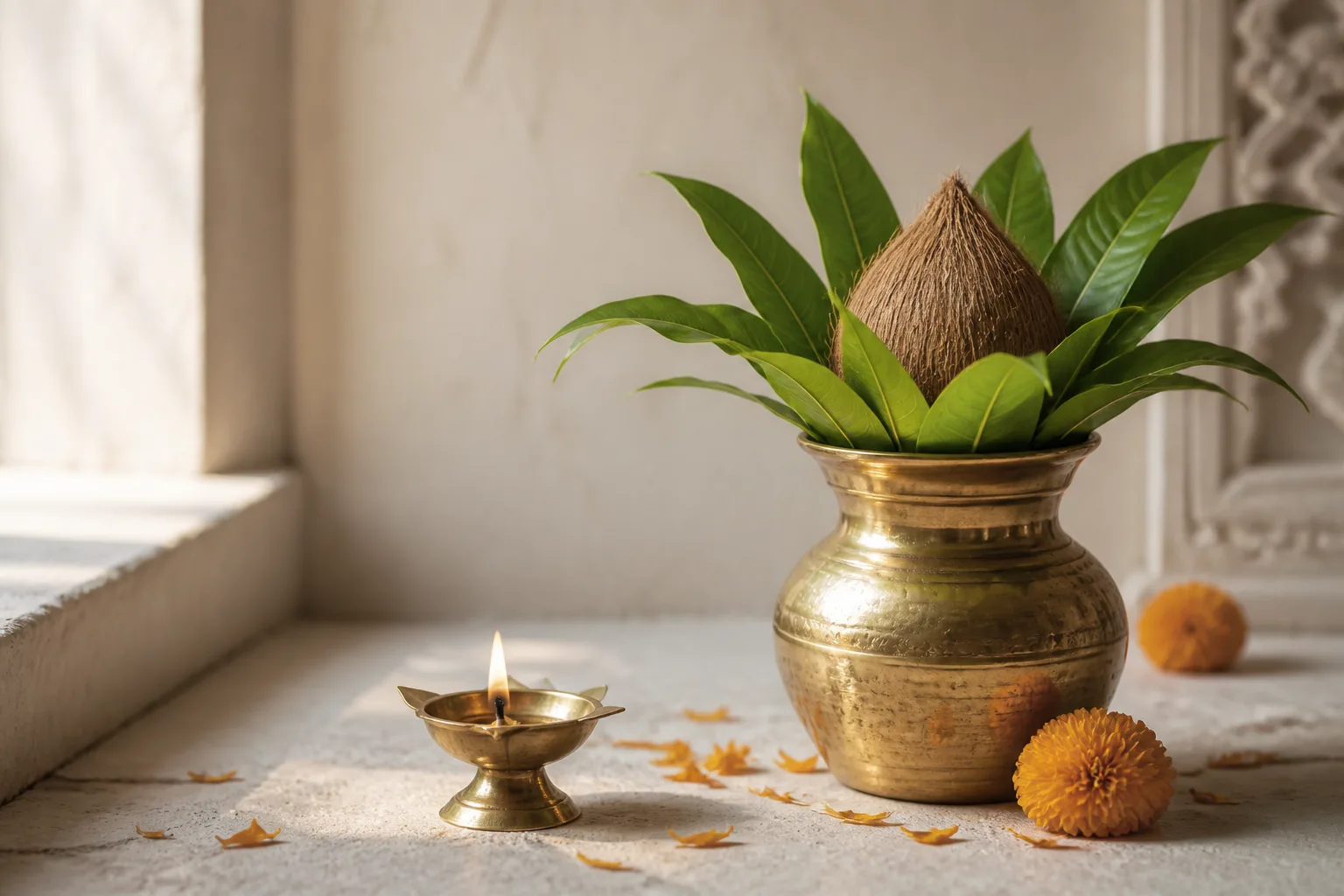
- Set up the puja. Place a small chowki covered with a clean red cloth. On it, set a brass or copper kalash filled with water, a coin (preferably silver) inside it, and unbroken rice (akshat) and red flowers around its rim. Place a photograph or small murti of Maa Lakshmi behind the kalash; many homes also place a small bowl of kheer or sweet rice as bhog.
- Light the diya. Light a ghee lamp before the murti. Apply kumkum and akshat to the murti's forehead. Offer red flowers, fruit, and one rupee or any small currency note as a symbolic offering.
- Recite the katha. Read the Vaibhav Lakshmi Vrat Katha aloud — to yourself if alone, or to family members gathered with you. Follow with the Lakshmi Gayatri mantra (eleven or one hundred and eight times).
- Aarti. Perform aarti with the lit ghee lamp, circling the murti gently while singing or reciting the Lakshmi aarti.
- Bhog and prasad. Offer the kheer or sweet bhog at Maa Lakshmi's feet. After a few minutes, take the bhog as prasad and distribute it — first to any married women in the household, then to all family members.
- Single meal. Many devotees observe a partial fast through the day, eating only one full meal in the evening (after sunset). The meal should be sattvik — no onion, garlic, meat, or alcohol — and ideally include the kheer prasad.
- Repeat for eleven Fridays. Maintain the same intention and the same vidhi each Friday. Missing a Friday by accident requires no expiation; missing it by carelessness should be made up by adding an extra Friday at the end.
Mantras
ॐ श्रीं ह्रीं श्रीं कमले कमलालये प्रसीद प्रसीद ॐ श्रीं ह्रीं श्रीं महालक्ष्म्यै नमः
Om Shreem Hreem Shreem Kamale Kamalalaye Praseeda Praseeda Om Shreem Hreem Shreem Mahalakshmyai Namah
Salutations to Maha Lakshmi who resides in the lotus and graces those who turn to her — may she be pleased.
ॐ महालक्ष्म्यै च विद्महे विष्णुपत्न्यै च धीमहि । तन्नो लक्ष्मीः प्रचोदयात् ॥
Om Mahalakshmyai Cha Vidmahe Vishnu Patnyai Cha Dheemahi · Tanno Lakshmih Prachodayat
We meditate upon Maha Lakshmi, the consort of Vishnu — may she illumine our minds. (Lakshmi Gayatri.)
Aarti
ॐ जय लक्ष्मी माता, मैया जय लक्ष्मी माता ।
तुमको निशिदिन सेवत, हरि विष्णु विधाता ॥
उमा, रमा, ब्रह्माणी, तुम ही जग-माता ।
सूर्य-चंद्रमा ध्यावत, नारद ऋषि गाता ॥
दुर्गा रूप निरंजनी, सुख-सम्पत्ति दाता ।
जो कोई तुमको ध्यावत, ऋद्धि-सिद्धि धन पाता ॥
तुम पाताल निवासिनी, तुम ही शुभदाता ।
कर्म-प्रभाव-प्रकाशिनी, भव-निधि की त्राता ॥
जिस घर में तुम रहती, तहं सब सद्गुण आता ।
सब सम्भव हो जाता, मन नहीं घबराता ॥
तुम बिन यज्ञ ना होवे, वस्त्र न कोई पाता ।
खान-पान का वैभव, सब तुमसे आता ॥
शुभ-गुण मन्दिर सुन्दर, क्षीरोदधि-जाता ।
रत्न चतुर्दश तुम बिन, कोई नहीं पाता ॥
महालक्ष्मीजी की आरती, जो कोई जन गाता ।
उर आनन्द समाता, पाप उतर जाता ॥
Udyapan — The concluding ceremony
After the eleventh Friday, perform the udyapan in the same form as the regular puja, but with the following additions:
— Invite seven married women (suhagans) to the home in the morning. Wash their feet with reverence, apply tilak and akshat to their foreheads, and offer them kumkum, a coconut, and a small gift (a piece of clothing, a steel utensil, or a small ornament — whatever the household can afford).
— Prepare a special bhog of kheer, halwa, or any sweet preparation traditional to your region. Offer it first to Maa Lakshmi, then serve the seven suhagans, then distribute the remaining prasad to all family members and to any visitors who come during the day.
— After the seven suhagans depart, light an extra ghee lamp before Maa Lakshmi and silently complete the sankalpa with which you began the vrat eleven Fridays ago — thank her, surrender any remaining anxiety about the result, and ask for her continued grace upon the household.
— Some traditions also recommend that on the udyapan day, you donate (daan) something specifically to a temple or to a needy family — clothes, food, or money. Lakshmi flows where she is shared.
Vaibhav Lakshmi (Maha Lakshmi) seva for Vaibhav Lakshmi Vrat
Vaibhav Lakshmi is the giver of lasting prosperity — Lakshmi archana on this Friday vrat carries the same prayer for wealth and household well-being.
Lakshmi archana performed in your name on a Vaibhav Lakshmi Friday, with sankalp for prosperity and family welfare.
Performed on your next observed Vaibhav Lakshmi Vrat · sankalp in your name and gotra · photo confirmation after seva
Frequently asked questions
What is Vaibhav Lakshmi Vrat?
Vaibhav Lakshmi Vrat is a Friday-observed vrat dedicated to Maa Lakshmi as Vaibhav Lakshmi — the giver of lasting prosperity. It is observed for eleven (or twenty-one) consecutive Fridays. The vrat involves a morning puja with kalash, ghee lamp, recitation of the Vaibhav Lakshmi Vrat Katha, kheer prasad, and a sankalpa held silently through all eleven Fridays.
How many Fridays should I observe Vaibhav Lakshmi Vrat?
The most common observance is eleven consecutive Fridays. Some traditions and some sankalpas call for twenty-one Fridays. Both are accepted; choose the count when you take the sankalpa and do not break it. If a Friday is missed by accident (illness, travel, monthly cycle), add one extra Friday at the end.
Can unmarried women or men observe Vaibhav Lakshmi Vrat?
Yes. While the vrat is most commonly kept by married women, unmarried women, men, and entire families also observe it. The sankalpa simply changes — for unmarried women it is often for finding a suitable spouse; for men, for business or family stability; for families, for collective harmony and prosperity.
What should I eat during Vaibhav Lakshmi Vrat?
Most observers keep a partial fast — no breakfast, light fruit or milk through the day, and a single sattvik meal in the evening. The evening meal should not contain onion, garlic, meat, or alcohol. The kheer prasad from the puja should be part of the evening meal. Strict observers keep a full nirjala fast (without water) until evening; this is optional and not required.
What is the udyapan of Vaibhav Lakshmi Vrat?
After the eleventh (or twenty-first) Friday, perform the udyapan: invite seven married women home, wash their feet, apply tilak, offer them coconuts and small gifts, and serve them the kheer or sweet bhog prepared for the day. Light a special diya before Maa Lakshmi and silently complete the sankalpa. Many traditions also recommend a daan to a temple or needy family on the udyapan day.
Can I observe Vaibhav Lakshmi Vrat during my menstrual cycle?
Traditional practice asks women to pause the vrat during the menstrual cycle and resume from the next Friday — adding the missed Friday(s) at the end so the count of eleven (or twenty-one) is completed. The pause is not a break in the vrat; it is part of how the vrat is traditionally kept by women.