Free tools
About this vrat
Shukravar Vrat (शुक्रवार व्रत) is the simplest and most accessible of the Friday Lakshmi vrats. Where Vaibhav Lakshmi Vrat is bound to eleven (or twenty-one) Fridays with a specific sankalpa, and where Santoshi Maa Vrat is bound to sixteen Fridays with the no-sour-foods discipline, the regular Shukravar Vrat is the ongoing weekly Lakshmi observance — kept for life, without a fixed count, as the steady weekly devotion of any Hindu household where Lakshmi is welcomed.
The vrat carries a dual association: with Maa Lakshmi (the goddess of prosperity, beauty, and abundance) and with Shukra (the planet Venus, whose qualities — refinement, beauty, marital harmony, sensual joy — closely mirror Lakshmi's own gifts). Friday in the Hindu week is therefore the day of Lakshmi-Shukra grace: the day on which homes are cleaned, lamps are lit at the household shrine, kheer or sweet bhog is prepared, and the family makes a small dedicated time before Lakshmi to invite her grace into the week ahead.
The form is gentle. Friday morning involves a bath, a Lakshmi puja with red or pink flowers and akshat, an offering of kheer or sweet bhog, the recitation of the Sri Sukta or the Mahalakshmi Ashtakam, and a single sattvik meal in the evening. White and red are the colours of the day; lakshmi-mukhi rudraksha or kamal-gatta beads are auspicious; and many traditional households perform a small Lakshmi-pujan on Friday evening at sunset, with the windows opened to invite Lakshmi into the home.
Shukravar Vrat — Katha
The legendary story recited as part of the vrat. Read aloud during the morning puja.
The Shukravar Vrat Katha is the story of a poor brahmin and his wife who lived in a small town. The brahmin was learned in the scriptures and pious in his daily duties; his wife was equally pious, devoted to Lakshmi-bhakti since girlhood. But their household was extremely poor — they often went hungry, their roof leaked in the rains, their clothes were patched many times over.
One Friday, the brahmin's wife had nothing in the home for the evening meal. She took her last small coin and went to the market to buy whatever she could afford. On the way, she saw an old woman seated by the road, dressed in shabby clothes, looking tired and hungry. The old woman called out to her: "Daughter, I have not eaten for two days. Please share whatever food you can spare."
The brahmin's wife, though she herself had nothing, looked at the old woman and could not turn her away. She took the coin she had been about to spend, walked to a nearby shop, bought a small portion of cooked food, and brought it back to the old woman. The old woman ate gratefully and, before departing, said to the brahmin's wife: "Daughter, what you have given me with no food in your own home, Lakshmi has noted. From this Friday onwards, observe the Shukravar Vrat with full sincerity. Every Friday morning, bathe, set up a small kalash before a Lakshmi murti, light a ghee diya, offer kheer or any sweet you can afford, and recite Lakshmi's name. By the seventh Friday, your household will know prosperity. By the year's end, it will be transformed."
The brahmin's wife went home with no food but with a strange peace in her heart. She told her husband what had happened. The brahmin, who had himself studied the scriptures and knew of the Shukravar Vrat, said: "Wife, what the old woman has told you is the very same instruction the Padma Purana gives. Begin the vrat this Friday. We have nothing — not even rice for kheer — but we will offer whatever we have, even if it is only water and a single grain of akshat."
The first Friday, the brahmin's wife performed the vrat with whatever she could find: a small earthen pot for the kalash, a single drop of oil in a clay diya, a few grains of rice that she had hidden away. She offered everything she had, recited the Lakshmi mantras, and held a sankalpa not for great wealth but simply for the dignity of a meal each day for her husband.
That very evening, a stranger came to the brahmin's door — a wealthy merchant from a distant city — who had heard of the brahmin's learning and had come to commission a long-form religious text in exchange for a generous payment. The brahmin accepted; within a month, the work was complete; the payment was substantial. The household had food, new clothes, and a roof that no longer leaked.
By the seventh Friday, the brahmin had received three more such commissions; the household was no longer poor. By the end of the year, it was modestly prosperous. The brahmin and his wife continued to observe the Shukravar Vrat every Friday for the rest of their lives, keeping the same simple form they had begun with — they did not become elaborate in their offerings even as their wealth grew. Every Friday, the wife prepared kheer; she gave a portion of it to a poor household before her own family ate; she lit a ghee diya at sunset; she recited Lakshmi's name.
The katha then turns. Many years later, when the brahmin and his wife had grown old, a woman from the next village — known in the region as wealthy but miserly — came to the brahmin's wife and asked her: "How is it that you, who began with nothing, have become so well-respected and content; while I, who began with everything, find my wealth slipping from me each year?"
The brahmin's wife answered her gently: "Sister, Lakshmi does not stay where she is hoarded. She stays where she is shared. The Shukravar Vrat is not a vrat for getting more; it is a vrat for becoming the kind of person Lakshmi visits. Begin the vrat this Friday — but begin it with a portion given to one in need before you eat. That is the heart of it."
The wealthy woman tried to follow the instruction. She prepared kheer; she made it elaborate; but she found herself unable to give the first portion away — pride and possession held her hand back. She abandoned the vrat after three Fridays. The brahmin's wife, watching, said only: "Lakshmi knows."
The katha closes with the affirmation that Shukravar Vrat is the simplest of vrats and the most demanding of disciplines. The form is easy — kheer, a diya, a brief recitation. The discipline is the heart-position: the willingness to share before keeping, to give before receiving, to hold Lakshmi as a guest rather than as a possession. Whoever observes the vrat with that heart receives Lakshmi's steady, unbroken grace; whoever observes it as a transaction loses what they already have.
Vrat Vidhi — How to observe
- Wake early on Friday. Bathe, wear clean clothes (red, pink, or white are auspicious for Lakshmi-puja).
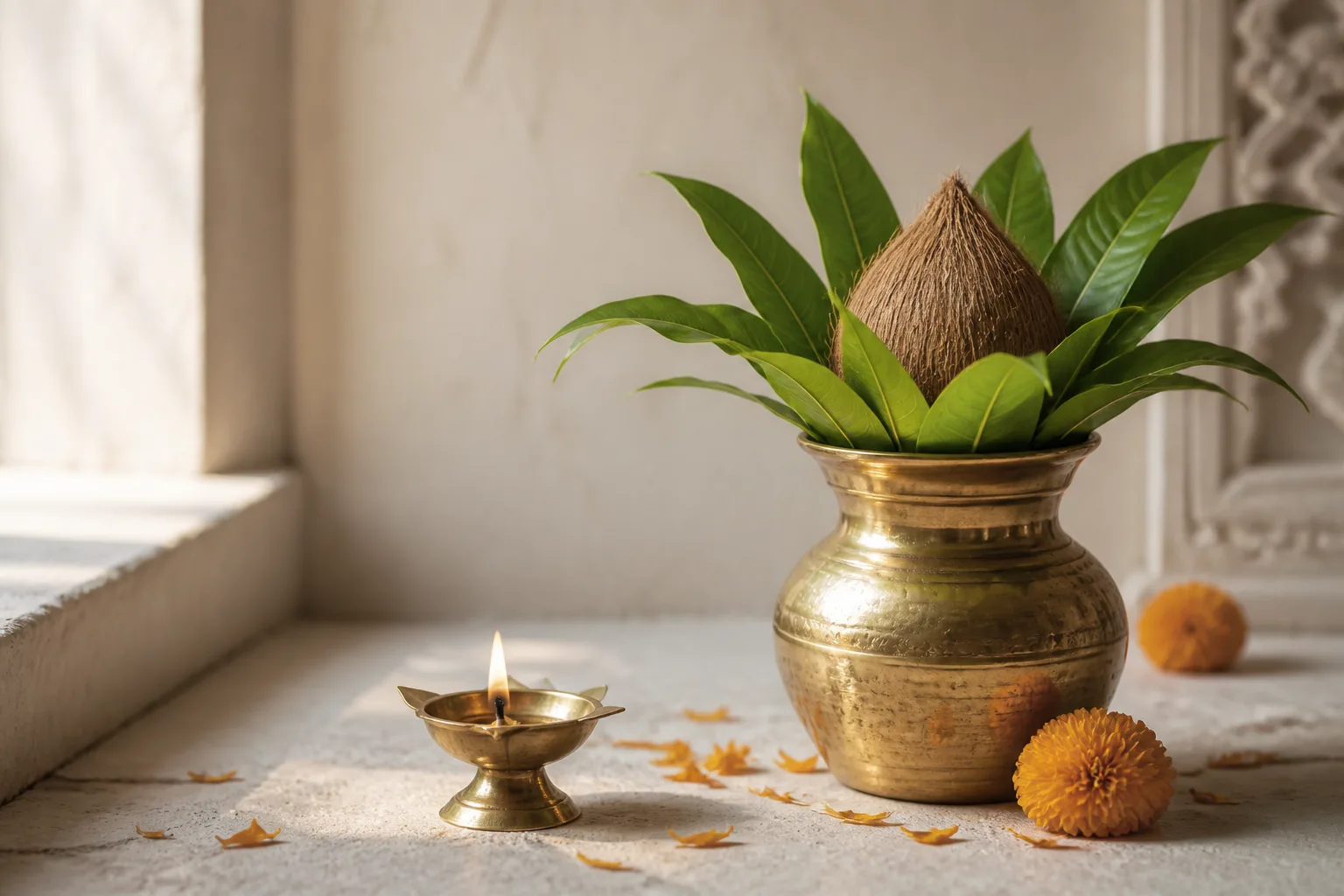
- Set up the puja. Place a small Lakshmi murti or photograph on a clean cloth (red is traditional). Set a small kalash with water, a coin, and red flowers; light a ghee diya.
- Offer akshat, flowers, and kheer. Apply kumkum and akshat to the murti. Offer red or pink flowers, lotus flowers (where available), and a small bowl of kheer (rice and milk pudding) or any sweet bhog. Add coins, a piece of yellow cloth, and incense.
- Recite the Sri Sukta or the Mahalakshmi Ashtakam. The Sri Sukta — the Lakshmi hymn from the Rig Veda — is the most traditional Friday recitation. The Sri Mahalakshmi Ashtakam (eight verses) is the more accessible alternative. Add the Lakshmi Gayatri 108 times.
- Aarti at sunset. Many traditional homes perform a second small Lakshmi-puja at sunset on Fridays — opening the windows, lighting an extra diya, performing a brief aarti. This is the moment Lakshmi is said to enter homes that have prepared for her.
- Single sattvik meal. Take one meal during the day, ideally including the kheer prasad. The meal should not contain meat, alcohol, onion, or garlic.
- Share the kheer. Give a portion of the kheer prasad to a poor household, to a temple, or to a family with less than your own — this is the heart of the Shukravar Vrat as the katha teaches it. Lakshmi visits homes that share before keeping.
- Repeat every Friday. This vrat has no fixed count. Many devotees observe it for life as the simplest weekly devotion of a Lakshmi-honouring household.
Mantras
ॐ श्रीं ह्रीं श्रीं कमले कमलालये प्रसीद प्रसीद ॐ श्रीं ह्रीं श्रीं महालक्ष्म्यै नमः
Om Shreem Hreem Shreem Kamale Kamalalaye Praseeda Praseeda Om Shreem Hreem Shreem Mahalakshmyai Namah
Salutations to Maha Lakshmi who resides in the lotus and graces those who turn to her — may she be pleased.
ॐ शुक्राय नमः
Om Shukraya Namah
Salutations to Shukra (Venus). (For relief from Shukra-related afflictions.)
Udyapan — The concluding ceremony
Because the regular Shukravar Vrat has no fixed count, the udyapan is flexible:
— **For lifelong observance**: there is no single udyapan. Many devotees mark major milestones — a particular wish granted, a year of unbroken observance, a household celebration — by performing an elaborate Lakshmi puja on a Friday with the feeding of seven brahmins and the donation of seven items (cloth, food, money) to a needy family.
— **For a goal-bound observance** (taken until a wish is fulfilled): once the wish is granted, perform a special Friday Lakshmi puja with the feeding of seven married women (suhagans), the offering of seven kinds of sweet bhog, and the donation of seven items to a temple or to those in need. Light seven extra ghee diyas at sunset.
— **For an annual close**: many devotees use Diwali (Kartik Krishna Amavasya — typically October or November) as the annual culmination of their Shukravar tapas. On Diwali night, the Mahalakshmi puja that the household performs becomes the formal udyapan for the year of Friday observances; the weekly observance begins anew the next Friday.
Maa Lakshmi (with Shukra) seva for Shukravar Vrat
Friday is Lakshmi's day — archana on this vrat carries the prayer for prosperity and grace that Shukra governs.
Lakshmi archana performed in your name on a Friday, with sankalp for prosperity and well-being.
Performed on your next observed Shukravar Vrat · sankalp in your name and gotra · photo confirmation after seva
Frequently asked questions
What is Shukravar Vrat?
Shukravar Vrat is the weekly Friday vrat in devotion to Maa Lakshmi and Shukra (the planet Venus). Unlike Vaibhav Lakshmi Vrat (eleven Fridays) or Santoshi Maa Vrat (sixteen Fridays with no-sour-foods rule), the regular Shukravar Vrat has no fixed count — it is observed every Friday for as long as the devotee chooses, often for life, as the steady weekly Lakshmi observance of a Hindu household.
What is the difference between Shukravar Vrat, Vaibhav Lakshmi, and Santoshi Maa?
All three are Friday vrats but differ in form and tradition. Shukravar Vrat is the open-ended weekly Lakshmi observance — simple, lifelong, no fixed count. Vaibhav Lakshmi Vrat is the eleven (or twenty-one) Friday observance with a specific sankalpa, ending in a formal udyapan. Santoshi Maa Vrat is the sixteen-Friday observance to Santoshi Maa with the strict no-sour-foods discipline. Many households observe Shukravar Vrat as the lifelong weekly base, with Vaibhav Lakshmi or Santoshi Maa taken at moments of specific need.
Why is sharing the kheer prasad central to Shukravar Vrat?
The Shukravar Vrat Katha teaches that Lakshmi visits homes where she is shared, not hoarded. The brahmin's wife began with nothing; her vrat worked because her first instinct was to share what little she had. The wealthy woman who tried the vrat without sharing failed. Sharing the kheer prasad — giving a portion to a poor household, a temple, or a family with less — is therefore not a peripheral element of the vrat but its devotional centre.
Can Shukravar Vrat help with Shukra Dosha?
Yes — relief from Shukra-related afflictions (weak Venus in the chart, Shukra Mahadasha difficulties, marriage delays attributed to Venus, beauty/grace concerns) is one of the traditional purposes. The combination of weekly Lakshmi observance, white-and-red offerings, the recitation 'Om Shukraya Namah', and the donation of curd, white cloth, and silver to those in need is considered the standard remedial measure for Shukra-related issues.
Can men observe Shukravar Vrat?
Yes. While the vrat is most commonly associated with women — particularly married women keeping the household's Lakshmi tradition — it is observed by men, unmarried devotees, and entire families. The form is identical regardless of gender. Many men observe it for general prosperity, business stability, and household harmony.
Should I observe Shukravar Vrat alongside Vaibhav Lakshmi?
Yes — they coexist gracefully. Many traditional households observe Shukravar Vrat as the lifelong weekly base, and take up Vaibhav Lakshmi for specific eleven-Friday sankalpas as needed. The Vaibhav Lakshmi count of eleven happens within the Shukravar weekly observance, with intensified sankalpa, kheer, and udyapan at the end. After the Vaibhav Lakshmi closes, the simpler Shukravar Vrat continues unbroken.